Every error code PostGrad's API can return, what it means, and how to recover without surfacing a stack trace to your end user.
Every PostGrad response follows the same envelope: { data, error }. One of those two is always null. When error is populated, it has a code, a message, and sometimes details. Knowing the codes up front means your agent never surprises you in production.
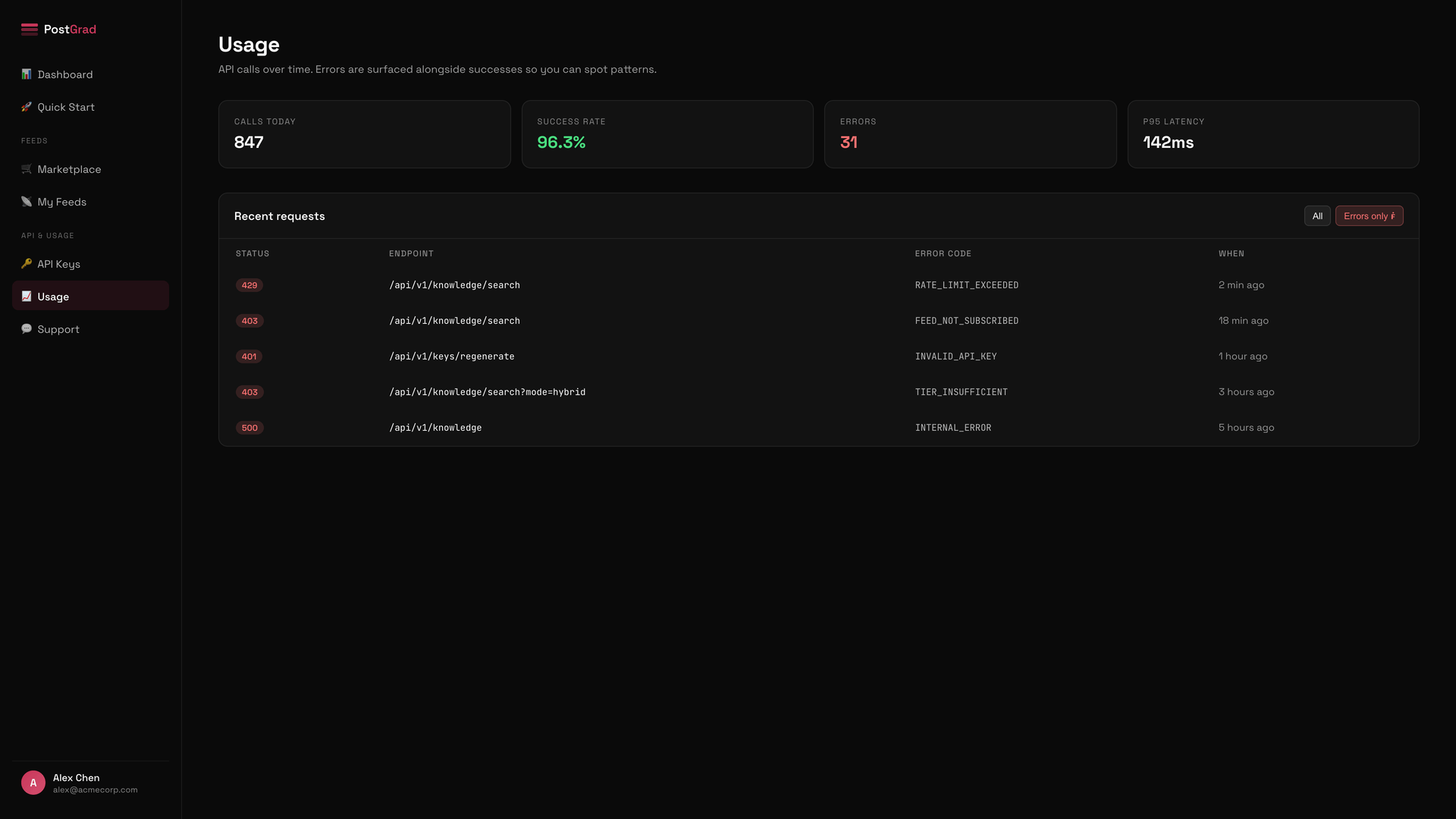
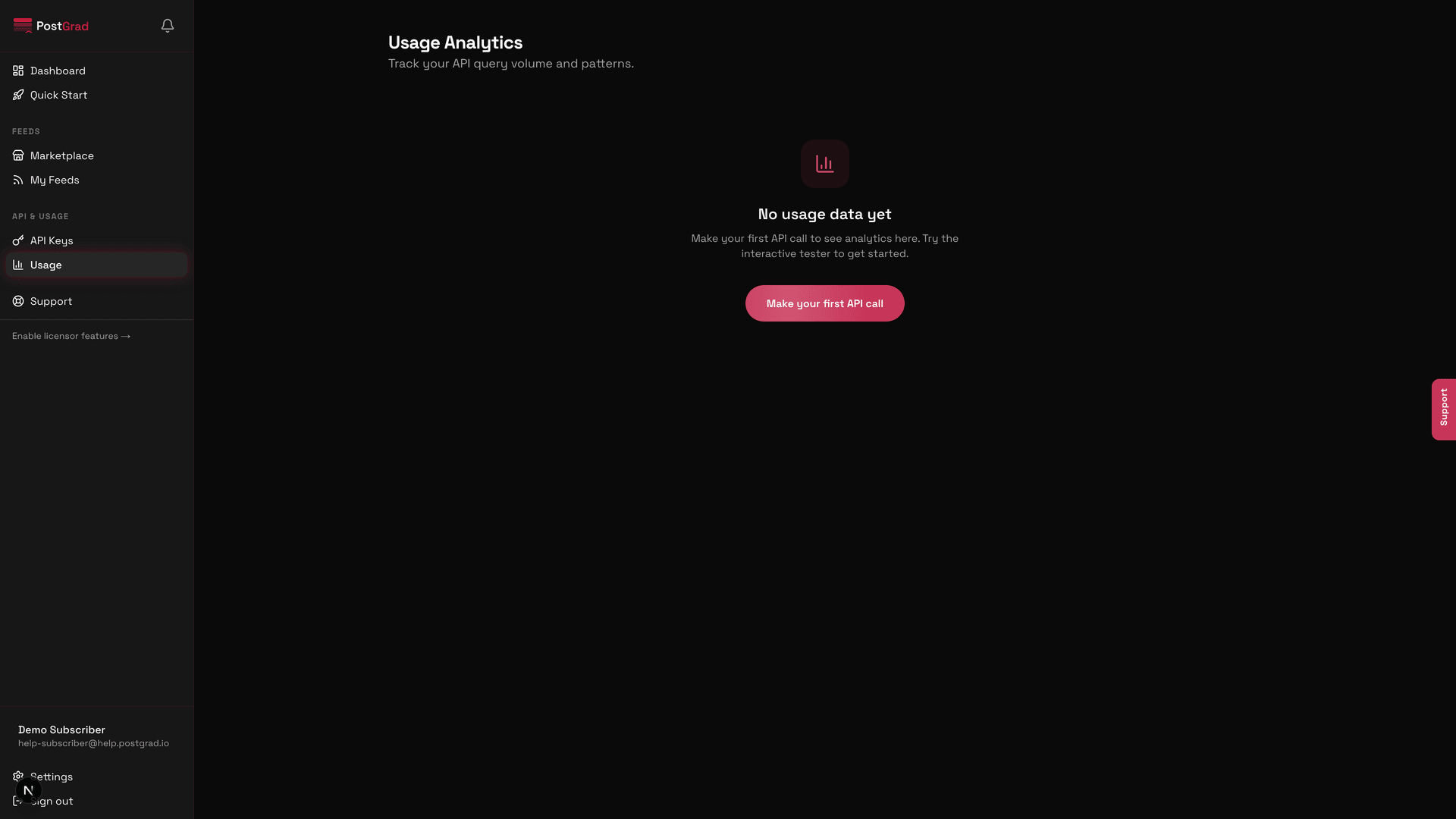
1Open the Usage page to see errors alongside successes
The Usage page showing a mixed list of successful calls (200) and failures (401, 403, 429).
2401 UNAUTHORIZED — your key is wrong
An example 401 response body with the error code UNAUTHORIZED and the message 'Invalid API key.'
3403 TIER_INSUFFICIENT — your plan doesn't cover this
An example 403 response with error code TIER_INSUFFICIENT and a help_url field pointing to the change-tier walkthrough.
This replaces what used to be a silent fallback to keyword mode — if you were relying on the fallback, audit your callers and either handle the 403 or upgrade.
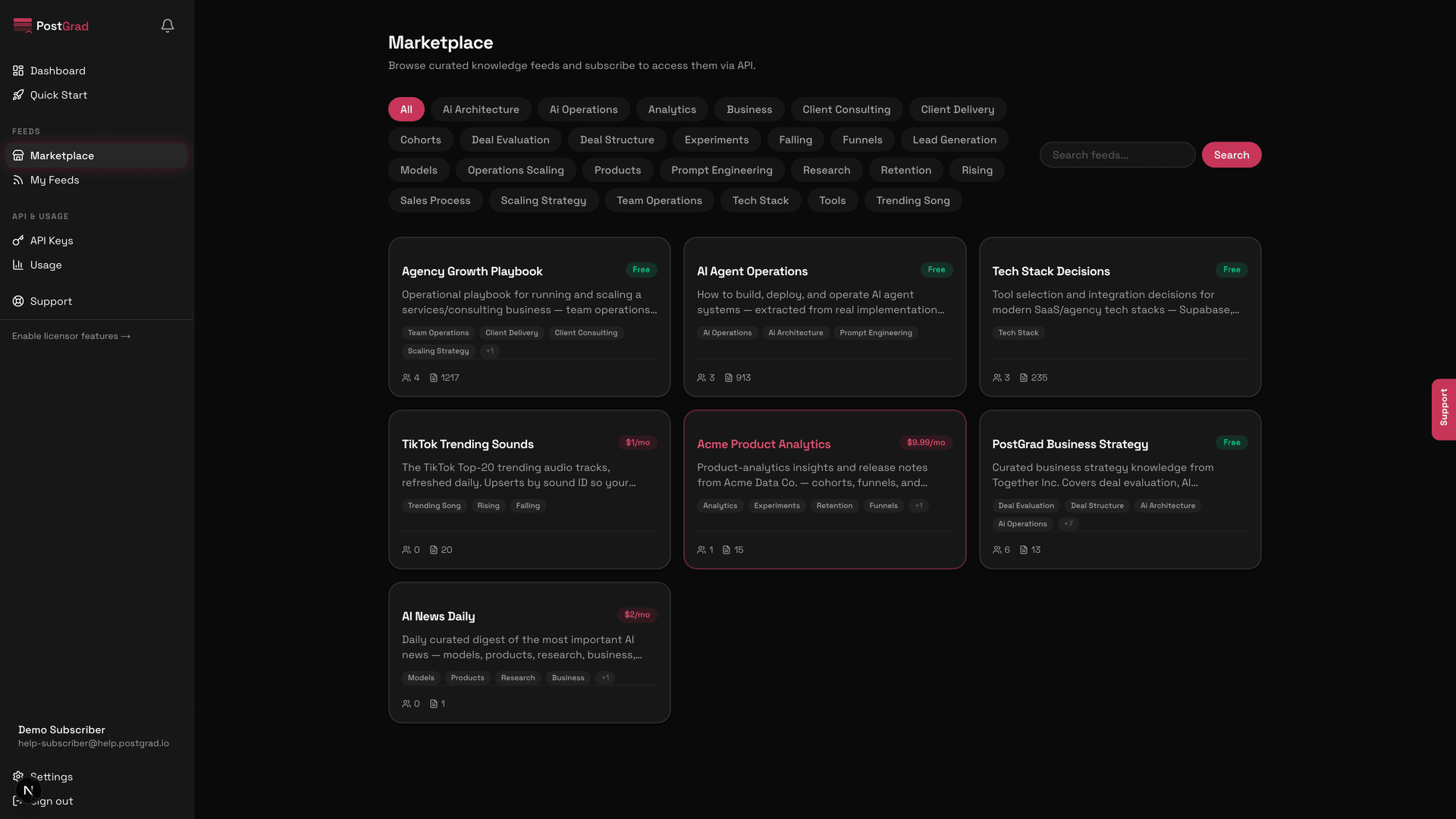
4403 FEED_NOT_SUBSCRIBED — access to this feed needs a subscription
An example 403 response for FEED_NOT_SUBSCRIBED with a link to the marketplace for that specific feed.
5429 RATE_LIMIT_EXCEEDED — too many calls per minute
An example 429 response with a Retry-After header and a message describing the per-minute cap.
6500 and 503 — the platform is having a moment
An example 5xx response with a generic INTERNAL_ERROR code and a link to the status page.
7Use the help_url field to deep-link users out of errors
A code snippet showing how to read error.help_url from the response and surface a 'Learn more' button to the end user.